Genetic Brain Profiling

Allowing individuals to perform at their personal peak by distinguishing the talents and preferences innately to each person which relates to their intellectual, perceptual, emotional and physical ability. We can accurately determine any person’s Profile online from the age of six with the help of a parent or a care taker.

Winston Churchill

He did poorly at schoolwork. He talked with a stutter and a lisp. Yet, he became one of the best leaders and orators of the twentieth century.

Albert Einstein

He was a daydreamer. His teachers told him he would never amount to anything, that his questions disrupted class discipline and that he would be better off out of school. Yet he went on to become one of the greatest scientists in world history.

Thomas Alva Edison

He was beaten at school with a heavy leather strap because his teacher considered him as an addled for asking so many questions. He was chastised so much that his mother took him out of school after only three months of formal education. He went on to become one of the most prolific inventors of all time.

Our Commitment

"DiscoverU is committed to helping individuals unlock their true potential"

Our Profiling

It gives you the information you need to understand and distinguish between your learned behavior and the strengths and talents that you are born with. We offer a unique science that cannot be compared to the many personality profile assessments available.

Our Mission

Is to empower people to better understand themselves and thus assisting them in making better life decisions.

How it works: Individual


1

Watch Video

Watch the video

2

Sign In

Sign in on SportCirqls

3

Activate

Activate Assessment + Payment

4

Email Link

Receive link (40min to complete)

How it works: Organisation


1

Watch Video

Watch the video

2

Sign In

Sign in on SportCirqls

3

Activation

Assessment Activation + Payment

4

Email Link

Members receive assessment

About Our Science


Genetic Brain Profiling

Allowing individuals to perform at their personal peak by distinguishing the talents and preferences innately to each person which relates to their intellectual, perceptual, emotional and physical ability.

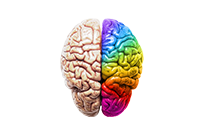
Brain Hemisphere Image

Brain
Hemisphere

The dominant brain hemisphere, which dictates how you would prefer to think, handle detail, your levels of creativeness and timekeeping.

Dominant Eye Image

Dominant
Eye

The dominant eye, which dictates how you perceive and process visual information. A left eye dominance candidate tracks from right‑to‑left, doesn’t always see detail, is sensitive to negative body language and can be at risk of being taken for a ride. Whilst a right eye candidate tracks from left‑to‑right, sees detail quickly and are more objective related to the behaviour or others.

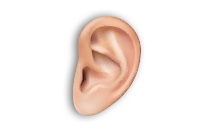
Dominant Ear Image

Dominant
Ear

The dominant ear, which determines how you hear and process auditory information.
Therefore, determining whether you have a “country club Manger/Mother Theresa” ear having difficulty saying no or do you possibly have a right impatient dominant ear making you assertive and possibly often interrupting people!

Dominant Hand Image

Dominant
Hand

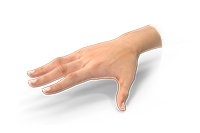
The dominant hand, which indicates how the person communicates, follow processes and hand techniques in sport. A right hand person has a structured/straight hand ideal for golf and batting, while a left hand person has an agile hand for tennis and squash.

Dominant Foot Image

Dominant
Foot

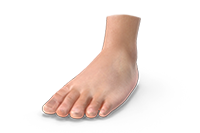
The dominant foot, which indicates how the person approaches problem solving and/or whether the person has a natural straight or agile foot preference in sport. The GBP will also assist in understanding how your behaviour will be affected in stress.

“The combination and interrelatedness of the five modalities makes up your genetic profile.”

Based on the profile, you are able to understand your preferred or natural tendencies and unconscious preferences. In addition to the above, the GBP will also tell you (amongst other things) how you will relate to other people and/or behave at work. It will assist you in understanding your feelings and emotions better and thus, how you will function unconsciously in the various dimensions of occupational behaviour.

Given that the GBP asks physical questions, it means that it is free of all of the biases that traditionally affect the results of a psychometric assessment:

  1. It is not possible for the candidate to “fake good”.
  2. The results will not be affected by the emotions of the candidate at the time of assessment.
  3. There is no need to interpret written questions, and therefore the bias introduced by taking an assessment in a language that is not the candidate’s mother tongue is removed.

Importantly, the GBP will tell you how you will function under stress and what will cause you to stress. For example, will you lose your ability to take in detailed visual information (such as statistical information), or will you be slower in solving problems? Are there times when you don’t want to interact with others, etc.

Other information that can be determined from a GBP includes (inter alia):

  1. Your barriers to effective functioning.
  2. Your ideal working environment to function optimally.
  3. Recommendations to overcome development areas that your profile may flag.
  4. Relationship needs, such as whether you would prefer written, verbal or visual recognition.
  5. Your functioning within a team.
  6. Your management and leadership style; for example, will you be able to reprimand others?

Why is Genetic Brain Profiling Important?

Once you understand your GBP, you can easily develop your natural inborn strengths and understand the challenges you may face and, you can actively work on your weaker points to become more successful in all spheres of life.

We are able to, by combining the brilliance of Genetic Profiling with our technology, assist with and identify:

School Image

School

  1. Preferred learning environments and challenges in educational situations.
  2. Possible learning difficulties and challenges.
  3. Academic Strengths and Weaknesses.
  4. Suitable learning styles for the profile.
  5. Guidance with subject choices and ideal career paths.
  6. How you perceive both social and educational information.
  7. Possible hyperactive behaviour and how to manage such.

Work Image

Work

  1. Preferred work environment to optimize your talent.
  2. Behavioural stressors.
  3. Strengths and Weaknesses relating to your role.
  4. Causes of stress and the handling thereof.
  5. Relationship needs when interacting with colleagues.
  6. Unconscious interpersonal communication style.
  7. Ideal candidates for specific positions.

Sport Image

Sport

  1. Your natural strengths vs learned strengths.
  2. What happens to your natural abilities under stress.
  3. Positions that are advantageous in relation to your GBP.
  4. Interpersonal relationship requirements with team‑mates in relation to their GBP’s.
  5. Consideration of important adaptations and decisions under high‑pressure situations.

“Mismatching” in school, work and sport environments continues today for millions of people. It is possibly the biggest single cause of school failure (for example). It is obvious that everyone has different preferences and talents. Pablo Picasso was a great painter; William Shakespeare a phenomenal writer; Lionel Messi, Tiger Woods and Naas Botha great sportsmen; Enrico Caruso a brilliant tenor; Anna Pavlova an outstanding ballet dancer and Dwayne Johnson a fine actor.

Yet many of our schools, universities, and training providers operate as if each person is identical. Even worse is that most are operating with an evaluation system that rewards only a limited number of abilities. These rewards early in life, often set the scene and separate the allegedly gifted and intelligent from those who are claimed to be less intelligent and underachievers.

“But standardised tests don’t test all abilities”.

One of the strongest warnings against labelling and “lumping together” of learners comes from Dr. Mel Levine who was a  professor of paediatrics at the University of North Carolina Medical School. Planet Earth, he says in his book “One Mind at a Time”, is inhabited by all kinds of people who have all kinds of minds.

The brain of each person is unique. He likens the human mind to a complex toolbox, where not everyone may become experts in using all the implements. He prefers developing a profile that identifies each child’s strength and locates those “trouble spots” where facets of a profile don’t “mesh” with some facets of schooling. Our ground breaking Edu-Profilogist behind the science has done exactly that - agreeing with Dr Levine that it is much more important to identify strengths than to concentrate too much on minor weaknesses.

“It is seldom that we find something so really original and ground-breaking ... knowledge from the neurosciences, information about how bodily movement, emotional expression, nutrition, and the social and physical environment influence learning, are all brought together in a remarkable synthesis”

Dr Willis Harman President, Institute of Noetic Sciences

The Team


Karen Botha

Karen Botha

Co-Founder and Profile Specialist

University of Nebraska (Lincoln) Bachelors of Science Degree in Education.
Inducted into the University of Nebraska’s Track and Field Hall of Fame.
Athletics: Olympian in Barcelona 1992 long jump.
African and South African long jump record holder.
African Champion Women’s Long jump 1992.
South African Long Jump Champion 1989,1990,1991 and 1992.

Naas Botha

Naas Botha

Founder

University of Pretoria 1976-1980
Inducted into the International Rugby Hall of Fame
State Presidents Award
Rugby: World XV 1986 and 1992
Springbok 1980-1992
Springbok Captain
South Africa Rugby Player of the year 1979,1981,1985 and 1987
Captain Northern Transvaal 128 games
Won 9 Currie cup medals
Started Icon Rugby Academy, Sharks Rugby Academy,
High Performance Centre at University of Pretoria
and Founder of SA Sports Hall of Fame.
American football - Dallas Cowboys
Rugby Analyst with Super Sport since 1994.
Magazine Rugby programs Boots and All and Super Rugby
Director and Head coach India Rugby.

Gaeby Botha

Gaeby Botha

Profile Specialist

University of the Free State 2018-2021 Bachelors in Agriculture majoring in Animal production
Northern Gauteng Hockey 2010-2016
Track and Field 400m Hurdles

Lee-gre Botha

Lee-gre Botha

Profile Specialist

University of South Africa: Currently studying Bachelor's of Theology
Northern Gauteng Hockey 2015-2018
Track and Field 100m
Academic Honours

The 13 Multiple Intelligences


For the Purpose of our work and acknowledging the complexity of the different Genetic Brain Profiles, DiscoverU agrees with the notion of the Multiple Intelligences. After you have done your profile, included in the feedback report of each profile, DiscoverU will define the ability of each intelligence according to your profile's unconscious preferences. Presently DiscoverU acknowledges 13 Intelligences (including the 9 from Gardner).

The ability to read, write and communicate with words.
Authors, journalists, poets, orators, copywriters, scriptwriters, political leaders, editors, publicists, speech writers, translators, interpreters, and comedians are obvious examples of people with linguistic intelligence.

Likely traits:

  • Sensitive to recognise language patterns
  • Orderly
  • Systematic
  • Ability to reason
  • Likes to listen
  • Likes to read
  • Likes to write
  • Spells easily
  • Likes word games
  • Has good memory for trivia
  • May be a good public speaker and debater – in general the emotional profiles prefer oral communication while the • receptive profiles prefer written communication.

How to strengthen for learning:

  • Tell stories
  • Play memory games with names, places
  • Edit a piece of writing full of mistakes
  • Try and improve a piece of writing by adding more adjectives
  • Read stories, jokes
  • Write own stories, jokes
  • Do vocabulary skits
  • Write in a journal or diary
  • Interviewing
  • Do puzzles, spelling games
  • Integrate writing and reading with other subject areas
  • Produce, edit, and supervise the class or school magazine
  • Debate
  • Discussions
  • Use word processor and introduction to computers

The ability to reason and calculate; to think things through in a logical, systematic manner.
These are the kind of skills which are highly developed in engineers, scientists, economists, accountants, detectives (police investigators), animal trackers, lawyers, and accountants.

Likely traits:

  • Likes abstract thinking
  • Likes being precise
  • Enjoys counting
  • Likes being organised
  • Uses logical structure
  • Enjoys computers
  • Enjoys problem-solving
  • Enjoys experimenting in a logical way
  • Prefers orderly note-taking
  • Enjoys strategic and analytical thinking
  • Keen on statistical reliance and verification
  • Often enjoys accounting or banking careers

How to strengthen for learning:

  • Stimulate problem-solving
  • Do mathematical computation games
  • Analyse and interpret data
  • Use reasoning
  • Encourage own strengths
  • Encourage practical experiments
  • Use prediction
  • Integrate organisation and mathematics into other curricula areas
  • Have a place for everything
  • Practice how to do things step-by-step
  • Use deductive thinking
  • Use computers for spreadsheets, calculations

The ability to think in pictures, to visualise a future result.
To imagine things in one’s mind’s eye. Architects, artists, sculptors, sailors, photographers, navigators, chess players, naturalists, theoretical physicists, battlefield strategists and strategic planners normally have this type of intelligence. People use it when they have a sense of direction, when they navigate or draw, or when they develop from mind ideas or flowcharts and find new ways of presenting ideas and things.

Likely traits:

  • Think in pictures
  • Creates mental images
  • Uses metaphor
  • Has sense of gestalt
  • Likes art: drawing, crafts, painting, building and sculpting
  • Easily reads maps, charts, and diagrams
  • Remembers with pictures
  • Has good colour sense
  • Uses all senses for imaging
  • Likes engineering

NOTE: Profiles with a blocked left eye in stress, although they are highly visual people may have difficulty in following directions from maps, even though maps are visually accurate!

How to strengthen for learning:

  • Use pictures to learn
  • Create doodles, symbols while listening
  • Draw diagrams, maps
  • Integrate art with other subjects
  • Use mind mapping to organise ideas
  • Do visualisation activities
  • Watch videos or create your own
  • Use peripheral stimuli on the walls to reinforce learning of the day
  • Use mime
  • Change places in the classroom from time to time to gain different perspectives
  • Use advance organisers or goal-setting charts
  • Encourage gardening
  • Use clustering
  • Highlight with colour
  • Use computer graphics

The ability to make or compose music, to sing well, or to understand and appreciate music, to keep rhythm.
This is a talent obviously enjoyed by musicians, composers, and recording engineers. But most people have a basic musical intelligence that can be developed.

Likely traits:

  • Sensitive to pitch, rhythm, timbre
  • Sensitive to emotional power of music
  • Sensitive to complex organisation of music
  • May be deeply spiritual
  • May create own music with computer software
  • Knows a lot of music selections, artists, and genre
  • Often tries to use music for learning

How to strengthen for learning:

  • Play a musical instrument
  • Sing in a choir
  • Learn through changing the theory into songs
  • Use active concerts for learning
  • Use passive concerts to relax
  • Exercise with music
  • Write music
  • Integrate music with other subject areas
  • Change your mood with music
  • Imagine/make pictures with music
  • Learn through raps such as timetables, whole language poems, choral reading
  • Compose music on computer

The ability to use one’s body skilfully to solve problems, create products, or present ideas and emotions.
Obviously, this is ability for athletic and sporting pursuits, artistic pursuits such as dancing and acting, inventors, mimics, karate teachers, race car drivers, outdoor careers, building or construction, and mechanically gifted. One can include surgeons in this category, but many people who are physically talented “good with their hands” don’t recognise that this form of intelligence as being of equal value to the others.

Likely traits:

  • Exceptional control of one’s body
  • Control of objects
  • Good timing
  • Trained responses
  • Good reflexes
  • Learns best by moving
  • Likes to engage in physical sport
  • Likes to touch
  • Skilled at handcrafts
  • Likes to act (when expressive)
  • Likes to use manipulatives
  • Learns by participating in the learning process
  • Remembers what was done rather than what was said or observed
  • Fidgety if lessons are boring
  • Mechanically minded

How to strengthen for learning:

  • Use physical exercises wherein you become the object you are learning about
  • Use dancing to learn
  • Use movement to learn
  • Use manipulatives in science, mathematics
  • Take lots of “state changes” and breaks
  • Integrate movement into all curricula areas
  • Mentally review while you are swimming, jogging
  • Build models, machines, technic Lego, handcrafts
  • Use karate for focusing
  • Do field trips
  • Play classroom games
  • Do drama, role play
  • Finger snapping, clapping, stomping, jumping, climbing

The ability to recognise flora and fauna, to make other consequential distinctions in the natural world, and to use this ability productive.
For example: Gardening, farming, or biological science. Farmers, botanists, anthropologists, explorers, conservationists, biologists, environmentalists, and zoologists fit into this category. Any professional working with plants and animals fits into this category!

Likely traits:

  • Negotiates well
  • Good knowledge of nature
  • Sensitive to ecology
  • Sensitive to environmental and animal abuse
  • Often vegetarian or vegan for environmental or cruelty reasons
  • Sees pattern in nature
  • Keen sense of balance with nature and the body

How to strengthen for learning:

  • Use nature metaphors
  • Teach via inquiry
  • Bring plants into the class
  • Permit sharing of pets
  • Connect nutrition to learning
  • Encourage project work
  • Use art and nature and natural phenomenon
  • Encourage planting of own vegetable garden
  • Teach outdoors

The ability to work effectively with others, to relate to other people and display empathy and understanding, to notice their motivations and goals.
This is a vital human intelligence exhibited by good teachers, facilitators, therapists, counsellors, managers, public relations, politicians, religious leaders, and salespeople.

Likely traits:

  • Negotiates well
  • Relates well, mixes well (unless receptive)
  • Able to read others’ intentions
  • Enjoys being with people (unless receptive)
  • Has many friends (unless receptive)
  • Communicates well, sometimes manipulates (more likely when expressive)
  • Enjoys group activity (unless receptive)
  • Likes to mediate disputes (especially when expressive)
  • Likes to cooperate
  • “Reads” social situations well
  • Has a need to be liked (more so expressive and emotional profiles)
  • Often likes attention (more so expressive and emotional profiles)

How to strengthen for learning:

  • Do cooperative learning activities
  • Plan to socialise with others
  • Use “pair and share” learning activities
  • Develop communication skills
  • Make learning fun
  • Learn to listen to others’ opinions
  • Integrate socialisation into all curricular areas
  • Use “people search” activities where you have to talk to others to get answers
  • Work in teams
  • Learn through service
  • Tutor others
  • Learn about cause and effect

The ability for self-analysis and reflection.
To be able to quietly contemplate and assess one’s accomplishments, to review one’s behaviour and innermost feelings, to make plans and set goals, to know oneself objectively. Philosophers, counsellors, and many peak performers in all fields fit into this category.

Likely traits:

  • Self-knowledge
  • Sensitive to one’s own values
  • Deeply aware of one’s own feelings
  • Sensitivity to one’s purpose in life
  • Has a well-developed sense of self
  • Intuitive ability
  • Self-motivated
  • Deeply aware of own strengths and weaknesses
  • Very private person (especially when receptive)
  • Wants to be different from mainstream

How to strengthen for learning::

  • Have personal “heart-to-heart” talks
  • Use personal growth activities to break learning blockages
  • Debrief activities
  • Think about your thinking through “pair and shares” and “think and listen”
  • Take time for inner reflection
  • Keep a journal
  • Do independent studies
  • Listen to your intuition
  • Discuss, reflect, or write what you experienced and how you felt
  • Permit freedom to be different from the group
  • Make “My Books” and journals of your own life story
  • Take control of your own learning
  • Question things

The ability to appreciate and accommodate views and opinions from people of other spiritual denominations
Church leaders, teachers, and journalists are all people who are faced with people with different world views and should have a strong spiritual intelligence. Apart from a job requiring a person to be respectful of others’ belief systems, all people should strive to be more accommodating towards others.

Likely traits:

  • Deep self-knowledge
  • Sensitive to one’s values
  • Sensitive to higher purpose
  • Often believes in transcendence
  • Often sensitive to ecology
  • Often a very private person
  • Self-motivated

How to strengthen for learning:

  • Have time for reflection
  • Discuss opinions peacefully given the other person option to disagree
  • Do independent studies on other beliefs
  • Respect and celebrate similarities of different beliefs and perspectives
  • Be kind and aware of others’ real circumstances and difficulties without judging

The ability to reason logically and objectively.
Componential intelligence is that facet of people’s mental ability that enables them to reason logically, think analytically, identify connections among ideas, and see various aspects or components of a problem.
Psychologists, sociologists, futurists, political leaders, legal professionals, and scientists are prime examples.

How to strengthen for learning:

  • Do the De Bono courses on
    • The Thinking Hats
    • Medal Values
    • Action Shoes
  • Learn to listen actively
  • Read autobiographies and history books to understand the other person’s point of view
  • Do debating
  • Read newspapers

The ability to think and solve challenges with new and ingenious solutions. Experiential intelligence is a facet of mental ability associated with a person’s capacity to combine disparate experiences in insightful ways. Like engineers, business engineers, architects, super specialists, environmentalists, advertisers, and marketers.

How to strengthen for learning:

  • Do the De Bono courses on
    • The Thinking Hats
    • Medal Values
    • Action Shoes
  • Think out of the box
  • Read books on famous inventors
  • Build 5 new things with the same Lego set
  • Do debating on how ordinary stuff can be used for a different purpose of recycled
  • Read books about how people adapted their lifestyle to survive in a different climate
  • Have conversations with people from another culture and find out how you might do the same thing in a different way and why!

The ability to think and solve challenges with new and ingenious solutions.
Experiential intelligence is a facet of mental ability associated with a person’s capacity to combine disparate experiences in insightful ways. Like engineers, business engineers, architects, super specialists, environmentalists, advertisers, and marketers.

How to strengthen for learning:

  • Do the De Bono courses on
    • The Thinking Hats
    • Medal Values
    • Action Shoes
  • Do debating about what in the world is out of fashion
  • Debate what new knowledge is needed in the future
  • Watch programmes on the 4th Revolution
  • Work in groups and come up with ideas how to make your immediate neighbourhood more practical and to allow for leisure and sport
  • Think of projects to take on to assist specific people with disability or some disadvantage to give them some independence!

The ability to think before one act and to take full responsibility for the consequences thereof when decisions and actions might involve or affect others (human or inhuman).

Caring for core ethical values such as:

  • Life - Human and Natural
  • Wellbeing - Social and Economic
  • Respecting Property
  • Open and Honest Communication
  • Basic Civil Rights

Every core value represents positive reciprocity, a form of mutually beneficial social interaction, or exchanges. If everyone benefits to a mutually satisfactory degree, it is better than if only a few benefits, or if some are seriously harmed. Win-Win relationships are better than Win-Lose or Benefit-Harm relationships. Such relationships offer significant positive reinforcement leading to a desire to continue such mutually beneficial behaviour and activities.
This is a minimal list of core values. It is a starting point, not the finish line.

How to strengthen for learning:

  • EMPATHY: Develop empathy for another person’s point of view.
  • CONSCIENCE: Foster moral discipline to help kids learn right from wrong.
  • SELF-CONTROL: Regulate your thoughts and actions so that you stop any pressures from within or without and act the way you know, and feel is right.
  • TOLERANCE: Respect the dignity and rights of all persons, even those whose beliefs and behaviours you may disagree with. Instil an appreciation for diversity.
  • FAIRNESS: Choose to be open-minded and to act in a just and fair way.

Always remember that the intelligences do not operate in isolation. We are born with a tacit potential for specific intelligences, while we need to develop others.
The life experiences of each learner will determine how much and how many they develop, predetermining their emotional intelligence, intellectual abilities, and common sense.

FAQs


Your GBP is what exists before you add life experience, job experience, learnt behaviour or education to your attributes. It is established at conception, and although you can learn to adapt your functioning through experience or learnt behaviour, GBP remains constant over a person’s life time. The person who is fulfilled and functioning optimally in all the aspects of life, is likely to be the person who is operating in line with his or her genetic preferences.

Profiling gives you the information you need to understand and distinguish between your learned behaviour and the strengths and talents you are born with. You can actively work on your weaker points to become more successful in your field as well as socially and, you will also gain insight into what your unconscious stressors are and how to manage such. Thus, providing you with customized guidance and advice relating to your unique needs in order to assist you to discover yourself within a couple of minutes.

Compared to your typical interview (18% accurate), personality and interest tests (42% accurate) and ability / aptitude tests (58% accurate) for example, Genetic Brain Profiling is 90% accurate.

Given that the GBP asks physical questions, it means that it is free of all of the biases that traditionally affect the results of a psychometric assessment:

  1. It is not possible for the candidate to fake good.
  2. The results will not be affected by the emotions of the candidate at the time of assessment.
  3. There is no need to interpret written questions, and therefore the bias introduced by taking an assessment in a language that is not the candidate’s mother tongue is removed.

No. Planet earth is inhabited by all kinds of people with different minds. Everyone is “wired” differently and has different preferences and talents. It is much more important to identify a person’s strengths than to concentrate too much on minor weaknesses.

Articles


The purpose of this study was to determine the dominance preferences of physical educators and the impact the profiles can have on pedagogical knowledge in the teaching/learning environment. Participants completed a self-assessment of dominant preferences survey in the areas of the brain hemisphere, eye, ear, hand and foot preference. Chi-square and cross-tab analysis were used to analyse the data according to age, sex, and teaching experience. A basic dominance profile for physical educators in the study was determined and the results revealed a profile of equal distribution for left and right-brain dominance and predominantly the right eye, ear, hand and foot preferences for the group. The profile for this group of physical educators was different from the profile of educators in previous research. The strengths of the left-brain dominants were in the visual, auditory, and movement preferences, while the weaknesses were in the kinaesthetic preferences.
The strengths for the right-brain dominants were only in the kinaesthetic preferences, while the weaknesses were in the visual, auditory, and movement areas.

Click on the download button to download the pdf - Profiles of dominance in physical education

DOWNLOAD

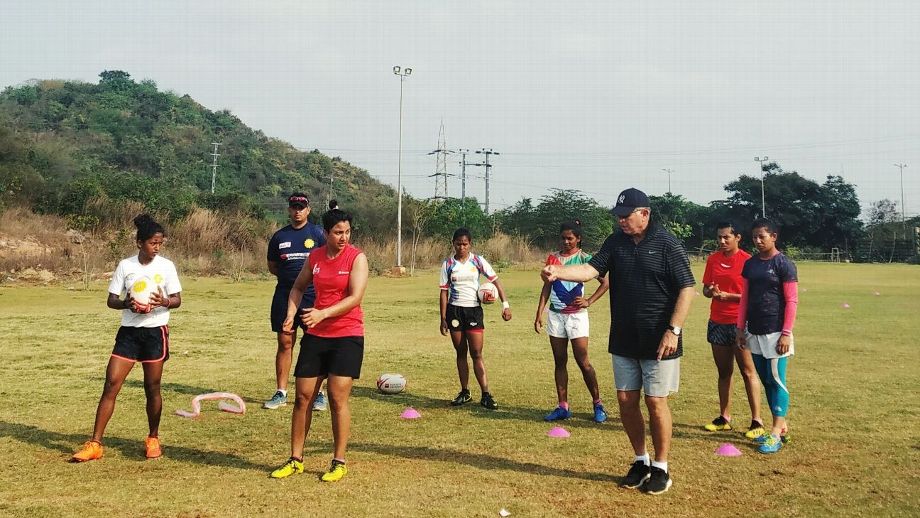
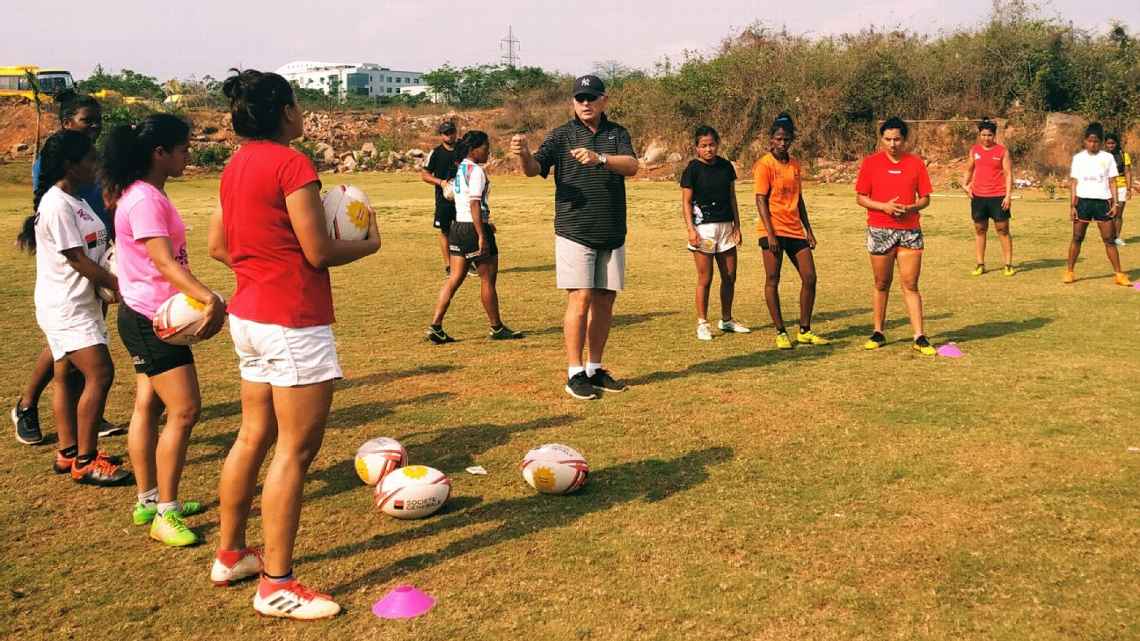
Naas Botha with members of the Indian women’s rugby squad.

Naas Botha with members of the Indian women’s rugby squad. Susan Ninan

Naas Botha is certain he’d have little trouble picking between his best kickers in the side.

It’s not the recently-appointed head coach of the Indian rugby teams talking smug. With a double tap on the table we’re seated at in the KIIT hostel in Bhubaneswar, the former Springbok legend tells us it’s faith in the science of genetic brain profiling. It’s the reason he doesn’t imagine himself facing the usual coach conundrums. Beyond rugby, this deep-dive into how the mind is structured fascinates him.

“If you know how each player in your team is made up,” Botha explains, “which position on the field suits their dominant functionalities, whether they thrive under pressure or implode or whether they like being spoken to or left alone, it makes it easier for you to get the best results out of them.”

Before the sub-continent coach job happened, the mission of taking this message to untapped territories turned Botha into a willing ambassador, bringing him to India two years ago. Today, schools, corporate organisations and athletes form Edu-Profile‘s clientele with assessments beginning as early as age three.

The assessment isn’t based on DNA swabs looking into chromosomal abnormalities. Instead, a 20-minute online questionnaire tests a person’s five dominant modalities - brain hemisphere, eye, ear, hand and foot. It explains which foot you’d use to test how cold the water is in a pool, which hand you’d use to throw a ball or why you prefer reading magazines from back to front.

Botha works closely with Pretoria-based Dr. Annette Lotter, who set out in this field three decades ago, while still a lecturer, after receiving skewed psychometric results of learners in rural South Africa. It moved her to explore non-biased testing without language barriers. Apart from cricket, she has also been working with South African rugby teams, golfers like Ernie Els and Charl Schwartzel, and is also running an academic program which assists students, parents and teachers with subject selection, study methods as well as career guidance.

“A 20-minute online questionnaire tests a person’s five dominant modalities - brain hemisphere, eye, ear, hand and foot. It explains which foot you’d use to test how cold the water is in a pool, which hand you’d use to throw a ball or why you prefer reading magazines from back to front.”

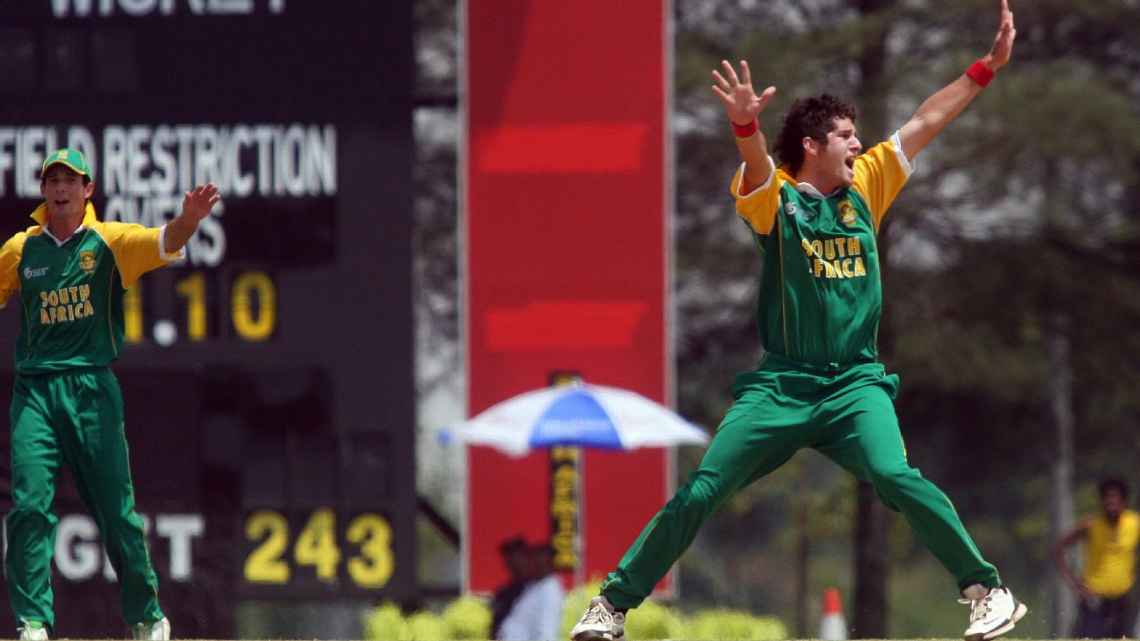
Over a decade ago, Lotter worked with South African cricketer Wayne Parnell and his teammates while they were still part of the Under-19 developmental squad in 2008. She recalls the South African left-arm pacer’s genetic profiles vividly – “left brain, left eye, left hand, right ear and right foot,” and helpfully breaks it down for us. “A left-brain person likes predictability, structure and a good game plan and prefers sticking to it. Also, in his case, the cross dominance of hand and foot offers greater balance,” she says, “On a normal day when he’s relaxed, he has access to both sides of the brain (since the hand and eye work from right brain and the ear and foot work from the left) but under stress, the non-dominant right brain hemisphere was likely to switch off and affect hand-eye coordination.” The inference then was that Parnell would fare better as a batsman if he’s not sent in the end overs.

South African captain Wayne Parnell celebrates after taking his first wicket of Bangladesh

South African captain Wayne Parnell (R) celebrates after taking his first wicket of Bangladesh during their ICC Under-19 quarter-final in Kuala Lumpur on February 24, 2008. Â Vino John/AFP/Getty Images

With 18 wickets from six matches, Parnell went on to finish at the top of the bowlers heap at that World Cup and batting twice at number six, and at three occasions on number seven, he stacked 134 runs in five innings, the fourth-highest for South Africa. Less than a year later, Parnell made his ODI debut against Australia in January 2009.

There are, it is understood, 32 different combinations of dominances between the left and right brain and ear, eye, hand and foot in existence with each having implications on the way a person is likely to react under stress. Lotter, an educationalist and occupational specialist, helps in anticipating these “blockages” that a person could suffer as a result and work on the emotional barriers.

Movement is one way used to deal with hemispheric dominance and stress. Moving both sides of the body in rhythmic fashion helps the body cross the mid-line (ability to cross over an imaginary line running down the center of the body, with arms and legs crossing over to the opposite side. Think: The children’s game of “Simon says” which uses instructions and movements like “touch your right knee with your left hand” or “put your left hand on your right shoulder”. In tennis, backhand and forehand swings or the overhead serve are good examples) and activates and integrates both brain hemispheres. The more often it’s done, the stronger the links between both halves of the brain become, says Lotter. “I’d put a kid on a wiggly chair, but an athlete needs to be on the move constantly, jiggling, dribbling and just not standing still. That’s why cricket is such a wonderful sport because when you bat you automatically cross the mid-line and access the other side of the brain.”

“ A left-ear person, we call them “Mother Teresa ears”, is sensitive to how people sound. Negative verbal feedback can rattle them. So it’s very important for coaches to know who the left-ear players on the team are because they can be very sensitive to how you speak to them.”
Dr. Annette Lotter


Take a sport like rugby. Every position is different and can indirectly dictate the ideal genetic profile. A hooker, for instance should ideally be right hand-left foot dominant for greater balance so that he can press straight into the scrum. But if he’s left-dominant in both parts, he will end up pushing harder to the left and swing the scrum instead. While in cricket, a dominant left foot can make an agile fielder since it allows greater advantage in quick change of direction while a left-handed batsman has the gift of elegance and unpredictability. “A right-hand batsman,” Lotter says, “can be more predictable in his shots. It’s what we call “structured hands”. While someone like Jonty Rhodes is an excellent example of what left-foot dominance can do for a fielder.”

The basic idea is to comprehend how the body can react under adverse or stressful scenarios and how involuntary reactions of non-dominant parts can be minimised. “So someone with a left ear and left eye will probably have a terrible game if his wife’s glum face in the crowd was last thing he sees before running into the field. A left-ear person, we call them “Mother Teresa ears,” is sensitive to how people sound. I often give them earplugs before get on the field so they can’t hear what the crowd is screaming. Negative verbal feedback can rattle them. So it’s very important for coaches to know who the left-ear players on the team are because they can be very sensitive to how you speak to them,” Lotter adds.

You can spot a left-ear early. They’re often ones who fill their walls with posters, use lots of study nooks, are reluctant to raise their hand in class and would not be suited for a tackle-oriented role in sport. “If a coach is yelling instructions at a left-ear dominant player, he’d probably hear the noise but not process the words,” Botha tells us, “I’m a right-ear person so the crowds can shout, scream, boo, call me names but it doesn’t really affect me. I think that’s helped me in my career.”

Naas Botha in conversation with members of the Indian women’s rugby squad

Naas Botha in conversation with members of the Indian women’s rugby squad. Susan Ninan

It’s why Botha plans to get all players on the Indian rugby teams profiled following the Asian Championships in June. He vouches that he’s found results in doing so within his own family. “Both my girls play field hockey and earlier I’d be standing by the field and yelling if they botched up a pass or dribble. Now that I have them profiled, I know what doesn’t work. I just make eye contact or maybe throw a short whistle and they know what I mean.”

Botha has been taking this program to schools in New Delhi and Mumbai for two years now. In one such school he visited, out of 1800 profiles tested, only seven kids had similar dominances. “How many Kohlis’ would you reckon we’d get out of those?” he queries, “Even one would be an overstatement. Sport is stress, lasting right until the final whistle, or like in the IPL, the very final ball of the final over. Some guys are brilliant, some can fall apart.”

With India boasting of nearly as many smartphones users as the U.S., Botha believes a mobile app which packages and delivers this concept, together with the assessment module in an easy, downloadable format, could be a game-changer. They’re still building it for users. “It’s not just sport,” says Botha, “just knowing yourself better, changes the way you look at the world.”

Susan Ninan
Apr 30, 2019, 03:36 AM
Link: https://africa.espn.com/rugby/story/_/
id/26637167/mind-games-how-brain-profiling-indian-rugby-best-move

SF questions and heart coherence

Kees Blase (HeartMath Netherlands) and Mark McKergow (sfwork – The Centre for Solutions Focus at Work)
Published in Solution Focused Management, edited by Günter Lueger and Hans-Peter Korn, Rainer Haupp Verlag (Vienna) 2006, pages 111-119.
Keywords: Emotions, heart coherence, questions, physiological response, solutions focus

Summary

In Solution Focused work we do not talk about emotions, but we are bringing clients in a process directly affecting emotion. Clients often experience the process of moving from a state of some frustration to appreciation. In this paper we discuss the view of emotions as personal experiences for the client, which may be correlated with Heart Rate Variability (HRV). HRV is easily measurable using sensors and computer software. During the conference session related to this paper we conducted an experiment to measure HRV during a solutions focused coaching interview, to investigate the nature of any correlation between ‘solution talk’ and HRV. We hypothesise that solution talk may enhance HRV, as compared with problem talk. The results from a live experiment at the SOL 2006 conference in Vienna are presented, which show significant increases in heart coherence during an SF coaching session.

Introduction

In Solution Focused work we do not talk about emotions, but we are clearly engaging clients in a process directly affecting emotion. Clients often experience the process of moving from a state of some frustration to appreciation.

The HeartMath Institute has fifteen years experience with measuring and practising how the heart reacts in processes of frustration and appreciation. HeartMath has created a biofeedback system to measure heart coherence by making visible the rate of change of heart rate. In this article we will bridge the experiental knowledge of solutions focus with neurocardiological science to attempt to discover what happens on the physiological body level when we experience ‘solution talk’.

“Emotion”

Recent research in neuroscience has resulted in a what is claimed as a more precise definition of “emotion”, as distinct from “feeling”. Neuroscientists Hanna and Antonio Damasio have written that “Emotions play out in the theatre of the body”. By contrast, “Feelings play out in the theatre of the mind” (Damasio, 2003). First emotions are coming up, and than they can effect feelings. Emotions are visible and measurable, and feelings are hidden, like mental images necessary are, unseen to anyone other than their rightful owner, the most private property of the organism in whose brain they occur. Emotions can be visible in facial expressions, in body language, and can be heard in the voice.

We can also make emotions visible with current scientific probes such as hormonal assays , electrophysiological wave patterns and heart rate variability. Feelings stay hidden, and can only be known by questioning the persons feelings. They are therefore of little conversational use, being an example of ‘what we cannot speak about, we must pass over in silence’ (Wittgenstein, 1961: 74).

Heart Rate Variability

In this article we will focus on the heart and measuring Heart Rate Variability (HRV) to get another view of emotion. We usually think of the heart rate as varying over periods of minutes – for example a resting pulse may be 70 beats per minute (bpm), increasing to 150 bpm after exercise. Closer examination, however, reveals that heart rare is not as regular as is often thought. The apparently steady 70 bpm is in fact irregular, with a different period between each individual beat. The heart accelerates and delays constantly. (See Figure 1)
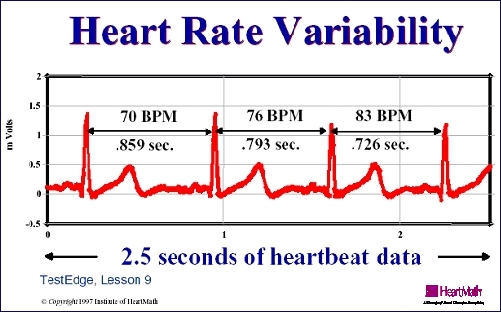
Heart Rate Variability Figure

Figure 1 : Heart Rate Variability

The HRV can be considered as the “language” of the heart, that can be heard each moment all over the body. HRV can be seen as an integral communication way of the body.

HRV and emotion

Different emotions show different patterns of the heart rhythm. In the pictures below (Figures 2 and 3) you can see the heart rhythms connected to the emotions labelled anger and appreciation. You can see that in the case of appreciation, the HRV is changing more smoothly – it accelerates and decelerates regularly. This is called heart coherence.

In anger the variability is more irregular. In frustration the pattern is even more disordered. The sympathetic and parasympathetic branches of the autonomous nervous system are out of sync with each other, battling for control over the heart rate-the sympathetic trying to speed it up and the parasympathetic trying to slow it down.
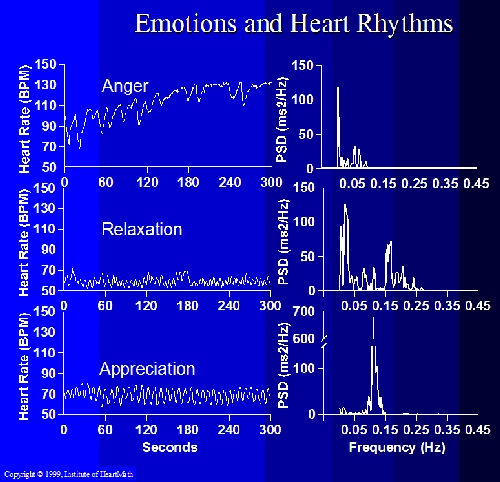
Emotions and heart rhythms Figure

Figure 2 : Emotions and heart rhythms
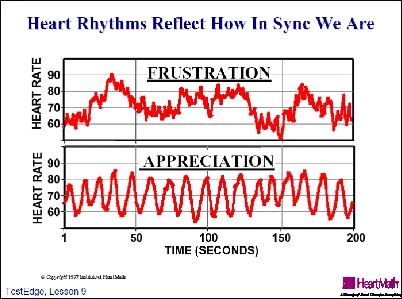
Heart Rhythms Figure

Figure 3 : Heart Rhythms reflect how in sync we are

Figure 2 shows an interesting, and for many people unexpected, phenomenon. Relaxation does not appear to effect heart coherence. During relaxation the heart rate is very disorderly. So this is not a simple matter of calmness equals heart coherence. The heart can be in a coherent or an incoherent state in either relaxation or arousal. So what is the significance of heart coherence? Is it beneficial? The answer seems to be Yes!

The Heart/Brain System

Recent research results at the Institute of HeartMath (IHM) (McCraty, Atkinson and Tomasino, 2001) have shown that heart rate coordination influences the coordination of the brain’s electrical activity. Furthermore, IHM studies (published in the American Journal of Cardiology, Stress Medicine and other peer reviewed journals and collected by the above authors) have shown that positive emotional states (such as love, care or appreciation) all create harmonious, coherent electrical patterns in the heart’s beat-to-beat rhythms, while negative emotional states (such as stress, anger, frustration, or anxiety) all create jagged, incoherent electrical patterns in the heart’s rhythms.

This correlation can be measured through HRV analysis. HRV is considered by cardiologists to be a measure of autonomic nervous system balance and function. Stressful, incoherent patterns in the HRV are communicated from the heart to the brain. Conversely, harmonious, coherent HRV patterns, generated by positive emotional states, entrain the brainwaves into harmonious patterns. In addition, positive emotional states and the coherent heart rhythms they generate have been shown to increase health and have positive effects on the nervous, immune and hormonal systems.

Arousal vs relaxation

When we look on the body level of hormones we see the hormone adrenaline levels rise when there is high arousal, and decrease during relaxation.
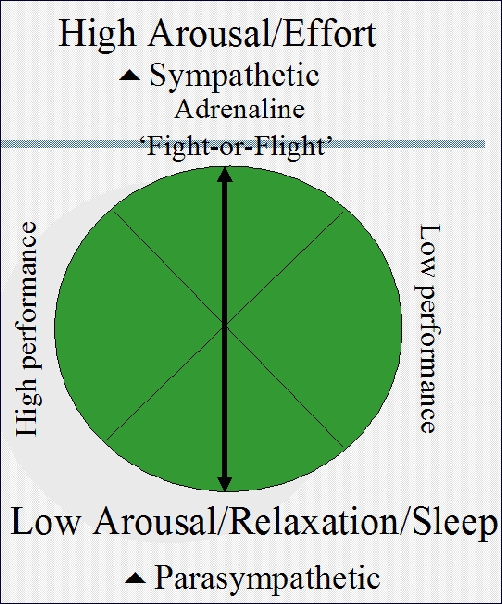
Arousal vs relaxation Figure

Figure 4 : Arousal vs relaxation – adrenaline

With heart coherence, we look at a different group of hormones; cortisol (the stress hormone) and DHEA(DeHydroEpiAndrosteron) known as the anti-aging homone. During heart coherence DHEA increases and cortisol decreases.
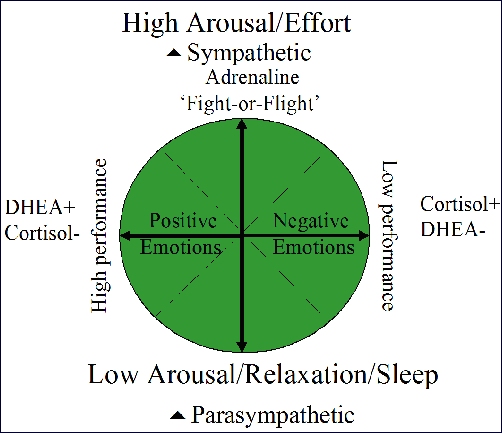
Heart coherence – Cortisol and DHEA Figure

Figure 5 : Heart coherence – Cortisol and DHEA
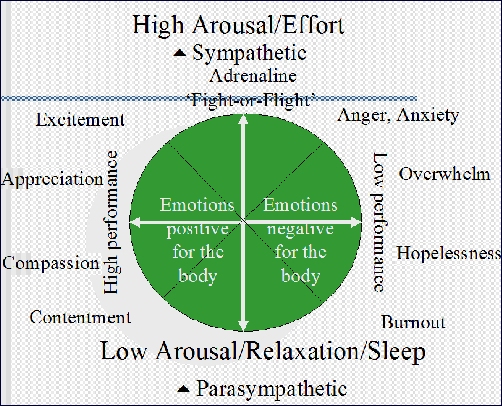
Heart coherence and positive emotions Figure

Figure 6 : Heart coherence and positive emotions

As can be seen from the tables below (data extracted from McRaty, 1998), a low ratio of DHEA to cortisol is correlated with many indicators of ill health and disease.

High Cortisal: DHEA

  • Accelerated aging and impaired skin elasticity
  • Impaired memory and learning - destroys brain cells
  • Thins bones (osteoporosis) and reduced muscle
  • Impaired immune function and more infections
  • Impaired metabolism - fat on waist and hips
  • Impaired liver function - increased cholesterol
  • Impaired pancreas - increased blood sugar

A high level of cortisol: DHEA is also linked to obesity, diabetes, hypertension, heart disease, cancer, Alzheimer’s and HIV related disease (many supplementary references can be found in McRaty, 1998).

The HeartMath method

The HeartMath method is a way for an individual to train and use biofeedback to achieve heart coherence. This heart coherence has important effects in management: effects have been shown in stress-management, clear thinking, decision-taking, peak-performance and creating an appreciative climate in companies around the world. (There are many references and cases in Childre and Martin, 1999)

Using the biofeedback of HeartRate Variability has advantages, because it is:

  • simple
  • sensitive
  • easy to measure
  • measures in the moment, reflects the effect of good and bad questions

Research showed:

  • better performance in sport, school and work
  • better balance emotions and mind
  • lowering blood pressure
  • changing the hormone ratio Cortisol/DHEA in a very positive way
  • benefits with depression, post-traumatic stress disorder, hypertension, etc

The method uses a biofeedback system to measure heart coherence. You can find out more about it at www.heartmath.com.

Heart Coherence and Solutions Talk

During the conference we carried out a live experiment to assess any correlations between heart coherence and solution talk. Mark interviewed a volunteer, who was wired up to an HRV measuring device running on a laptop PC. Kees supervised the measurements and helped us to interpret the data.
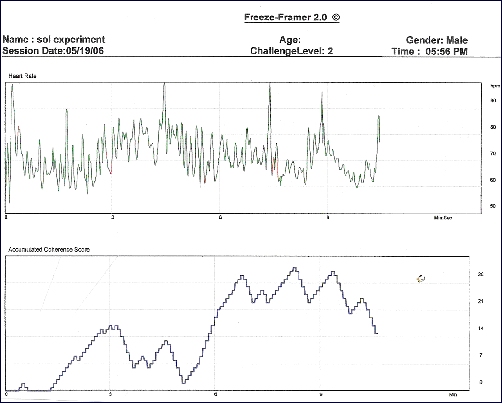
Experimental results for heart rate Figure

Figure 7 : Experimental results for heart rate (above) and HRV coherence (below)

The figure above shows results obtained during the experiment. The top graph shows the client’s heart rate(varying around 70 bpm during the interview). The bottom graph shows the coherence of the heart rate variability.

At the start of the interview Mark asked the client about what he would like to improve in his life (work life balance). Mark helped him to build a Platform about the kinds of things he might be wanting in a more balanced life. There were problems with the heart rate sensor at this time, so coherence was not measured during this part of the interview.

Once the sensor was sorted out and measuring commenced, Mark summarised the platform and reminded the client about the things that would make for a more balanced life. This happens between 1.00 and 3.10 on the graph. During that period we see a coherent pattern of the heart rate variability appearing – similar to coherent wave pattern shown in Figure 3. In the accumulated coherence score, the line goes up in the period 1.20 to 3.00. We do not see this coherent pattern while the client was speaking, but when he listens to his own ideal moments heart coherence appears: it seems that heart coherence appears more easily while listening then while speaking. This is one good reason why it is so important that we repeat the clients’ own words, so they can feel them and reflect on them.

At 3.10 Mark started the miracle question. At the beginning of the miracle question, the client is thinking, maybe his mind jumps between different situations or possibilities. The classic miracle question involves waking up tomorrow and finding that a miracle has happened. This client says “This is difficult. Tomorrow is Sunday, I am still at the conference, so how can I imagine myself in a perfect future situation?” Mark’s reaction was simple: tell me about your perfect Monday. The next moment the client described a quiet breakfast on Monday with muesli and a big smile appears on his face. On the screen we see that the HeartRate Variability becomes coherent again: the coherence line rises in the period between 5.00 minutes to 7.00 minutes. During this time Mark only asked: “What else?”.

The question “what else?” and being silent for a moment are very effective tools, in which coherence can appear. We did a similar experiment in Amsterdam earlier in 2006, where we also found that silence is very important. When you ask a question, it is incredibly important to leave the other person with the question, to give time and space. The body reaction is clear: the more you create silent moments after questions…. the more coherence….the more the process deepens. A solution focussed interviewer can see it as a compliment when someone in the audience thinks that the process is slow, and yet we can see the significance of the pauses and silences. Slow down to make the process quicker.

At the end Mark formulated compliments and affirms. It has been known for more than ten years that appreciation creates coherence in the Heart Rate Variability, and so it is no surprise that the line goes up from 8.50 till 10.00, the end of the short interview. The heart is really touched by the solution focussed approach.

Conclusions

During the experiment we showed, in one case at least, that a solution focused interview definitely affects the client on the body level (which might also be called the emotional level) even though emotions were not discussed. The client’s building of an answer to the miracle question (the construction of a Future Perfect, in Mark’s terms) increased coherence, as did the affirms at the end of the interview. The silences, pauses for thought and gentle ‘what else’ questioning all helped the process.

There may be more to learn from further work using HRV measurements. These might include:

  • what are effective questions and what less effective ones?
  • how much silence do you need to proceed effectively? What is the most effective timing?
  • what is the effect on coherence when you talk a lot as an interviewer?

What words help and what words are less effective?

  • what is the effect on coherence when you summarize ideal moments and when you are appreciative?

We should take care to remember that ‘every case is different’ and to beware over-generalising. However, the present experiment has shown conclusively that any accusations of SF ignoring the emotions are very wide of the mark.

References

Childre, D and Martin H (1999), The Heart Math Solution, San Francisco: HarperCollins www.heartintelligence.com

Damasio, Antonio ( 2003). Looking for Spinoza: Joy, sorrow and the Feeling Brain, Orlando: Harcourt

McCraty R (1998). The impact of a new emotional self-management program on stress, emotions, heart rate variability, DHEA and cortisol. Integrative Physiological and Behaverial Science, Vol 33, Number 2 pp151-170.

McCraty R, Atkinson M and Tomasino D (2001). HeartMath Research Center, Institute of HeartMath, Science of the Heart, Publication No. 01-001. Boulder Creek, CA, available at www.heartmath.org/research/science-of-the-heart

Wittgenstein L (1961), Tractatus Logico-Philosphicus (translated by DF Pears and BF McGuiness), London: Routledge

About the authors

Mark McKergow: PhD MBA, consultant, speaker, trainer and author, co-author of The Solutions Focus: The SIMPLE Way to positive change. Founder of SolutionsBooks and involved in all four SOL conferences so far. He often describes himself as a ‘recovering physicist’.

Kees Blase, founder of the National Centre for Stressmanagement in the Netherlands – responding to teacher stress and a retreat centre for burnout. He is also a medical physicist and a trainer in human resource management, and director of HeartMath Netherlands, that aims to give the heart its rightful place in personal growth and self-management.

Twisting and somersaulting make up the majority of gymnastics skills. Gymnasts decide at a very early age whether to turn to the left or to the right, and usually maintain this preference throughout their career (Arkaev and Suchilin, 2004).

While it is generally accepted in the coaching literature that an athlete should maintain his or her turning preference, one problem arises from a misperception of turning direction when being upside down, that is likely to develop in young gymnasts (Arkaev and Suchilin, 2004). One feels turning leftwards but is turning rightwards instead, because the vestibular system is placed upside down during an overhead phase in a particular skill. This misperception often causes problems of learning more complex skills, like a twisting somersault. Because the turning preference is often determined from self-reports of young gymnasts, indicating the direction in which they feel good when performing a particular skill, the actual twist direction is likely to be different between skills with different functional demands (Sands, 2000). It is furthermore likely to assume that gymnasts choose their preferred twist direction in favor of other factors, like lateral preference (Golomer, Rozey, Dizac, Mertz, and Fagard, 2009).

The Genetic Brain Organisation Profile of a candidate predetermines already at conception the innate hand-eye-ear-foot coordination and operational functioning under normal circumstances and predicted compensations needed during stress. Our Russian competitors in sport has known this secret for selection purposes for most of the last century and has illustrated again and again in highly competitive situations that their athletes and Olympians had some subtle qualities that the west is still envious about. Each person is programmed with a Genetic Dominance Blueprint at conception which is important for two reasons:

  • a. to assist the body to intuitively step out of a problem when needed; and
  • b. to distinguish each person from the other regarding preferred cognitive and intellectual ability

Click on the download button to download the pdf - Born to be different - Talent id

DOWNLOAD

“The human brain is the most complicated object in the known universe!”
Robert Winston


In last week’s article the development of dendrites around neurons was discussed with reference to the role of revision in the learning and growing situation. This week we will examine the body’s response to stress and its impact on learning. Nicky Hayes, editor of Foundations of Psychology, states that ´the body’s reaction to assessment tasks, exams, tests, may be characterized by a change in behaviour, disturbed sleep patterns, tiredness, worry, irregular eating habits, suppressed immune system and therefore increased infections and the inability to concentrate.

Click on the download button to download the pdf - Role of synaptic gap

DOWNLOAD

In modern science, the question of the human brain is still complex and urgent. Scientists from different positions try to study the specificity of brain activity.
There are very few developments on our subject, however, it is possible to note studies of:

  1. Kirsanov VM
  2. Romanov Yu N
  3. Koryukalova Yu I
  4. Dugnist P Ya
  5. Strizhkova T Yu
  6. and others.

Click on the download button to download the pdf - Sport Research Russia

DOWNLOAD

Contact Us


South African

Whatsapp: +1(816) 716 0390
Email: info@discoverU.global

New Zealand/ Australia

Contact person: Helgard Groenewald
Mobile no: +64 21 232 9617
Email: helgard@sportcirqls.com

USA

Contact person: Naas Botha
Email: info@discoverU.global

Contact person: Karen Botha
Mobile no: +1(816) 716 0390
Email: karen@discoverU.global

Contact person: Gaeby Botha
Mobile no: +1(816) 716-8710
Email: gaeby@discoverU.global

Contact person: Lee-gre Botha
Mobile no: +1(816) 716-0024
Email: leegre@discoverU.global

Paygate Card Brand Logos